


The Pakistan Telecommunication Authority (PTA) has formally urged all major cellular mobile network operators (CMOs) in the country to integrate artificial intelligence (AI) and analytics-driven network management tools as part of a strategic effort to enhance mobile network quality, coverage reliability, and service performance across Pakistan.
Why This Matters
The regulator’s recommendation stems from mounting QoS challenges stemming from spectrum scarcity, infrastructure constraints, and persistent power instabilities that are impacting service consistency and user experience. PTA’s position was articulated in a written response to the National Assembly Standing Committee on IT and Telecom, where the authority outlined both the current limitations and AI-driven pathways to improvement.
Key Drivers for AI Adoption in Telecom
1. Spectrum Limitations & Operational Complexity
- Pakistan currently faces one of the lowest spectrum allocations in the region, with only ~274 MHz assigned to CMOs. Demand has surged with approximately 48 million additional mobile broadband subscribers in recent years, pushing existing capacity to its limits.
- Spectrum scarcity makes efficient utilization and proactive performance optimization essential — a capability where AI and machine learning (ML) systems can significantly increase throughput and decrease congestion.
Technical angle: AI-driven automation (e.g., machine learning-based load balancing, dynamic spectrum allocation, and predictive resource management) can substantially reduce manual tuning overheads and improve network KPIs under constrained resources.
2. Infrastructure Gaps & Backhaul Constraints
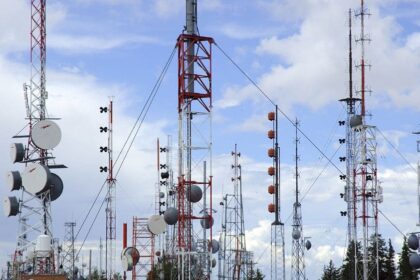
- PTA highlighted low fiber-to-tower ratios and reliance on a limited number of submarine cable links as infrastructural chokepoints.
- Upcoming licensing frameworks are expected to mandate operators to address backhaul and capacity limitations more aggressively — with AI analytics flagged as a key enabler for real-time traffic engineering and anomaly detection.
Technical perspective: With AI telemetry, operators can correlate multi-layer network data (RAN, backhaul, core) to identify bottlenecks quickly and apply corrective policies (e.g., SD-WAN optimization, QoS tuning).
3. QoS Monitoring & Crowdsourced Analytics Integration
PTA already uses traditional QoS surveys and crowdsourced performance data to benchmark operator performance.
AI integration will augment these analytics with real-time network telemetry, automated pattern recognition, and predictive insights that can preempt degradations before they impact subscribers.
Regulatory & Strategic Implications
AI as a Mandatory Advisory Direction
PTA has issued advisory directions for CMOs to deploy AI-based optimization tools — signaling a shift toward data-driven regulation.
This sort of regulatory push is consistent with global telecom trends where:
- AI-driven self-organizing networks (SON) and closed-loop automation improve both coverage and customer experience.
- KPI tracking moves from batch analysis (surveys) to continuous AI-assisted performance feedback loops (real-time flagging and autonomous responses).
Contextualizing the Push with Broader Sector Goals
Spectrum Expansion Plans
Pakistan plans to expand available spectrum by ~600 MHz through auctions and reallocation in early 2026 more than doubling current allocations.
The regulatory strategy couples spectrum liberation with AI-enabled optimization so operators can use new spectrum more efficiently and responsibly.
National Digitization & Ecosystem Efforts
Parallel initiatives like partnerships with analytics firms (e.g., Opensignal) for real-time performance benchmarking show a broader trend toward objective, data-centric oversight and improvement.
Challenges & Considerations Ahead
Technological & Skills Barriers
Operators must invest in:
- Scalable AI/ML infrastructure (compute, data pipelines, storage)
- Data science talent to develop, tune, and validate models
- Integration with existing OSS/BSS stacks
Ethical & Data Governance
Telecom AI adoption raises questions about:
- subscriber privacy
- automated decision accountability
- algorithmic fairness
Standards and audits will likely be necessary as AI systems begin to make autonomous or semi-autonomous optimizations.
PTA’s directive underscores a regulatory and technological pivot toward AI-augmented network operations as a strategic necessity rather than optional innovation. For Pakistan’s telcos, this represents both a technical challenge and a competitive opportunity — with potential gains in QoS, spectrum efficiency, operational automation, and ultimately subscriber satisfaction.