
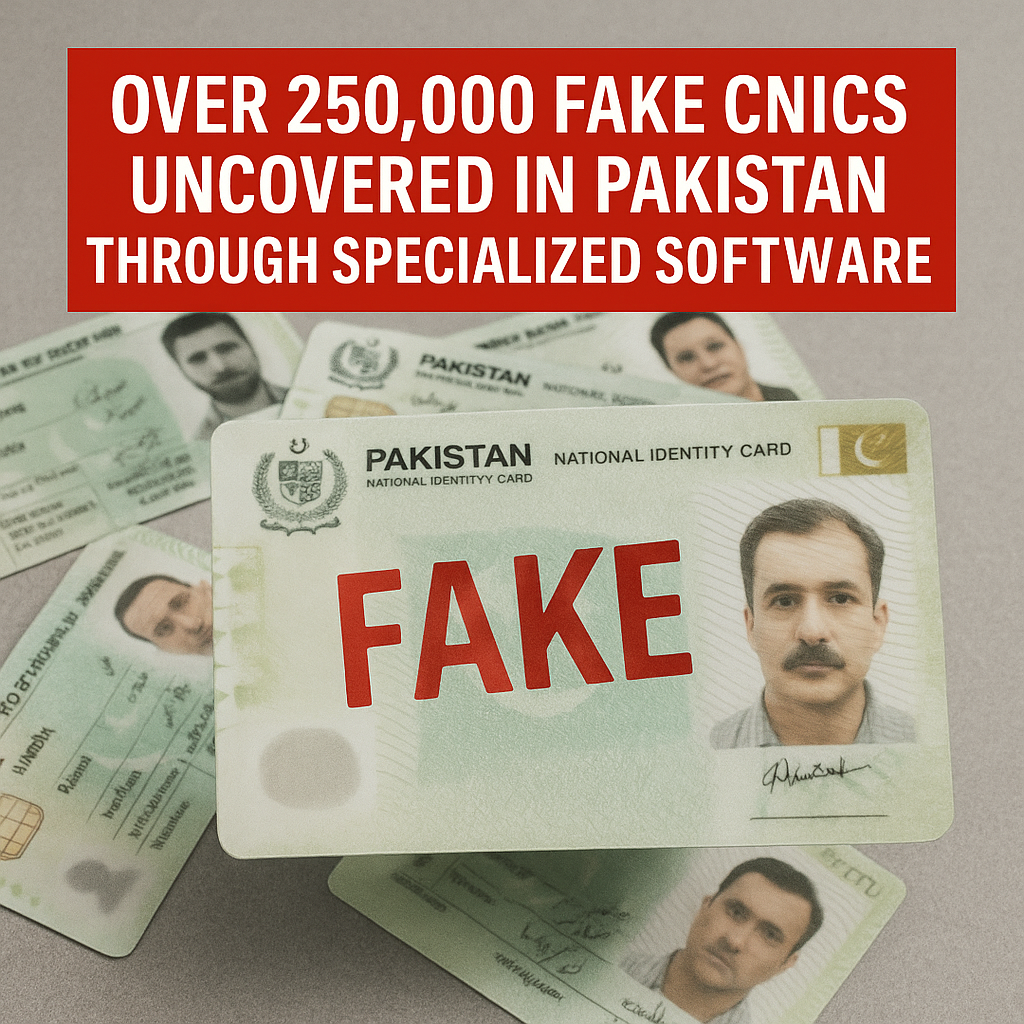


A major identity fraud scandal has come to light as authorities uncovered more than 250,000 fake Computerized National Identity Cards (CNICs) allegedly created through a specialized software system. The revelation has sparked serious concerns about the integrity and security of Pakistan’s national identification database.
According to investigation reports, the fraudulent network used advanced digital tools to generate and manipulate authentic-looking CNICs, exploiting loopholes within the system to insert falsified data. These fake IDs were reportedly being used for illegal activities, including property transfers, financial transactions, and even cross-border crimes.
How the Fraud Was Exposed
Sources close to the inquiry revealed that the software enabled the duplication and fabrication of identity data, creating CNICs indistinguishable from genuine ones at first glance. The breakthrough came when the system detected inconsistencies between biometric data and registered records, leading to the exposure of the network.
Initial audits indicated that some internal personnel may have been involved in facilitating or overlooking the data breaches, either for financial gain or under coercion. Investigations are currently underway to identify the full extent of involvement, both internally and externally.
NADRA’s Response
The National Database and Registration Authority (NADRA) has launched an extensive internal probe to identify weaknesses in its infrastructure. Officials have confirmed that all compromised identity cards are being cancelled, and an advanced biometric re-verification drive is being initiated to secure the database.
In a statement, NADRA clarified:
“We have zero tolerance for any compromise on the integrity of Pakistan’s identity system. All individuals and officials found involved will face strict legal action.”
The authority has also announced plans to enhance its security protocols, integrating AI-based verification tools, multi-layer biometric checks, and real-time fraud detection systems to prevent similar incidents in the future.
National Security and Economic Implications
Experts warn that the discovery could have far-reaching implications for Pakistan’s security framework, financial systems, and social programs. Fake CNICs can be misused for terrorism financing, human trafficking, and money laundering, posing a grave risk to national stability.
Financial institutions, telecom operators, and government welfare programs that rely on CNIC verification have been alerted to re-screen their user databases to detect fraudulent entries.
Call for Stronger Oversight
Cybersecurity analysts have urged the government to conduct a comprehensive forensic audit of the identity issuance system and impose stricter penalties for data tampering.
They recommend deploying independent cybersecurity monitoring teams and increasing transparency within NADRA operations to restore public trust.
The scandal serves as a stark reminder of how critical data security and internal oversight have become in the digital era. Pakistan’s identification infrastructure, once considered among the strongest in South Asia, now faces pressure to rebuild its credibility through transparency and technology-driven reform.
As investigations progress, the public awaits clarity on how a system designed to protect identity was compromised — and what steps will ensure such a breach never happens again.