

Authorities have airlifted the bodies of five more international climbers to Skardu following the deadly avalanche that struck Broad Peak in Gilgit-Baltistan last week. The recovery marks another major step in one of the most challenging high-altitude rescue operations carried out in Pakistan in recent years.
According to the Alpine Club of Pakistan (ACP), the recovered climbers include renowned British-Nepali mountaineer Nirmal Purja, along with Wang Zhong, Nima Sherpa, Gyalu Sherpa, and Killi Pemba “Kilu” Sherpa.
Complex Recovery at Extreme Altitude
The avalanche hit Broad Peak on July 30, disrupting communication with a 10-member international expedition led by Nirmal Purja. Days later, Purja’s company confirmed that there were no survivors from the team caught in the disaster.
Officials described the recovery effort as technically demanding due to the mountain’s extreme altitude, unstable snow conditions, and continued avalanche risks.
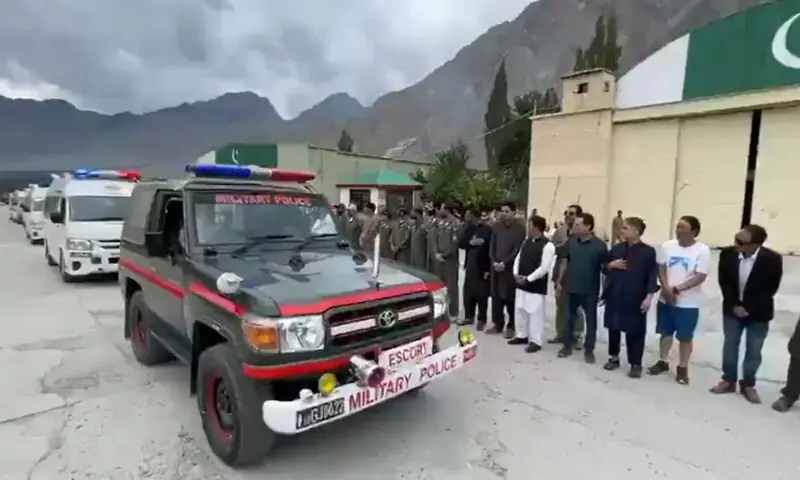
After being recovered from the mountain, the five climbers’ bodies were transported by Pakistan Army helicopter to the Combined Military Hospital (CMH) in Skardu for legal formalities, documentation, and identification procedures.
Repatriation Process Underway
The Alpine Club of Pakistan said the recovered climbers will be transferred to Islamabad before being repatriated to their respective home countries under special arrangements.
Before the transfer, each coffin was draped with the national flag of the climber’s country and an official farewell ceremony was held in Skardu. Representatives from the Alpine Club of Pakistan, local administration, Pakistan Army, tourism authorities, and government officials attended the ceremony and paid tribute to the deceased mountaineers.
Search Efforts Continue
Despite the latest recovery, the operation is still ongoing.
According to ACP Secretary General Ayaz Shigri, seven bodies have now been recovered, while rescue teams continue searching for Pakistani climber Sohail Sakhi and American climber Sarah Mallory Geis, who remain missing.
ACP officials also confirmed that the body of Nawang Thindu Sherpa has been located, but recovery has not yet been possible because it lies in an area considered highly dangerous due to avalanche risks and difficult terrain.
Rescue Teams Face Difficult Conditions
Officials involved in the operation praised the dedication of Pakistan Army personnel, local high-altitude porters, rescue workers, and experienced mountaineers participating in the mission.
Persistent bad weather delayed helicopter operations earlier in the week, making it difficult to move recovered bodies from Broad Peak’s base camp to Skardu. Once weather conditions improved, helicopters successfully completed the transfer.
The Alpine Club of Pakistan stated that search and rescue teams will continue using all available resources in an effort to locate the remaining missing climbers.
The Broad Peak avalanche remains one of the deadliest mountaineering tragedies in Pakistan in recent years, highlighting the significant risks faced by climbers attempting some of the world’s highest and most challenging peaks.