

New research shows AI boosts productivity but fails at complex software engineering, keeping human developers firmly in control
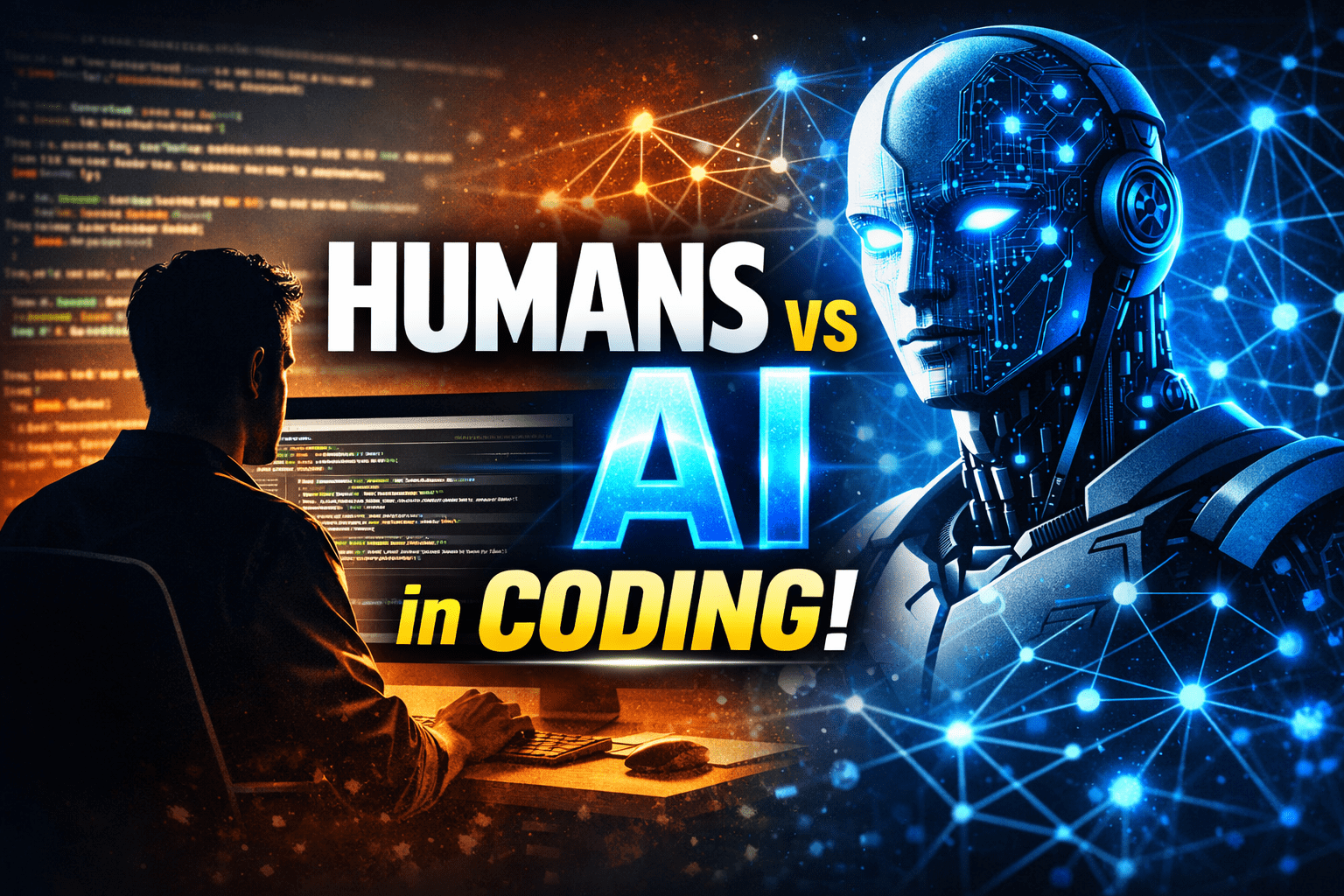
Despite rapid advances in artificial intelligence, a new study has found that human developers remain significantly more capable than AI systems when it comes to real-world software development, easing widespread fears about mass job displacement in the tech sector.
The research, conducted by a consortium of academic institutions and industry labs, evaluated leading AI coding models across a range of programming tasks — from simple code generation to large-scale system design, debugging, and long-term maintenance. The results were clear: AI performs well as an assistant, but falls short as an autonomous software engineer.
AI Excels at Syntax, Struggles With Systems
According to the study, modern AI models can rapidly generate boilerplate code, autocomplete functions, and suggest fixes for isolated bugs. However, they consistently failed in scenarios requiring:
- Deep architectural decision-making
- Understanding of business logic and product intent
- Managing technical debt and legacy systems
- Long-term reasoning across large codebases
- Secure, scalable system design
Researchers noted that AI models often produce code that looks correct but contains hidden logical flaws, security vulnerabilities, or scalability issues — problems that experienced developers are trained to anticipate and prevent.
“AI can write code, but it does not understand software,” the study concluded. “Programming is only a small part of software engineering.”
Human Judgment Remains Irreplaceable
The findings reinforce what many senior engineers already observe in practice: coding is not just about writing syntax, but about making trade-offs, understanding users, anticipating edge cases, and collaborating across teams.
While AI tools can accelerate development, they lack contextual awareness — such as why certain architectural constraints exist, how regulatory requirements apply, or how a system must evolve over time. In contrast, human developers combine technical skill with domain knowledge, intuition, and accountability.
Industry experts involved in the research emphasized that AI currently operates in a reactive mode, responding to prompts rather than proactively designing or validating systems end-to-end.
Productivity Tool, Not a Replacement
Rather than replacing developers, the study found that AI tools are most effective when used as productivity amplifiers. Developers using AI assistants completed routine tasks faster, but overall software quality depended heavily on human oversight.
In many test cases, AI-generated code required significant refactoring before it could be safely deployed. Teams that relied too heavily on automated outputs experienced higher bug rates and longer debugging cycles.
This aligns with enterprise feedback from global tech firms, where AI is increasingly positioned as a “copilot” rather than a decision-maker.
Implications for Pakistan’s Tech Workforce
For Pakistan’s rapidly growing software industry, the findings are particularly relevant. As local firms expand into global outsourcing, SaaS, and AI-enabled products, experienced developers remain a critical competitive advantage.
The study suggests that demand will continue to rise for engineers who can:
- Architect scalable backend systems
- Integrate AI responsibly into production environments
- Ensure security, compliance, and performance
- Translate business needs into robust technical solutions
Rather than reducing opportunities, AI is expected to raise the skill ceiling, rewarding developers who understand systems deeply rather than those who rely solely on code generation.
The Future: Developers Who Use AI Will Win
The report concludes that the real risk is not AI replacing developers, but developers who refuse to adapt. Engineers who learn to leverage AI tools effectively while maintaining strong fundamentals are likely to become more productive and more valuable.
As AI continues to evolve, human developers remain firmly in control of software creation, decision-making, and accountability roles that current AI systems are nowhere near replacing.