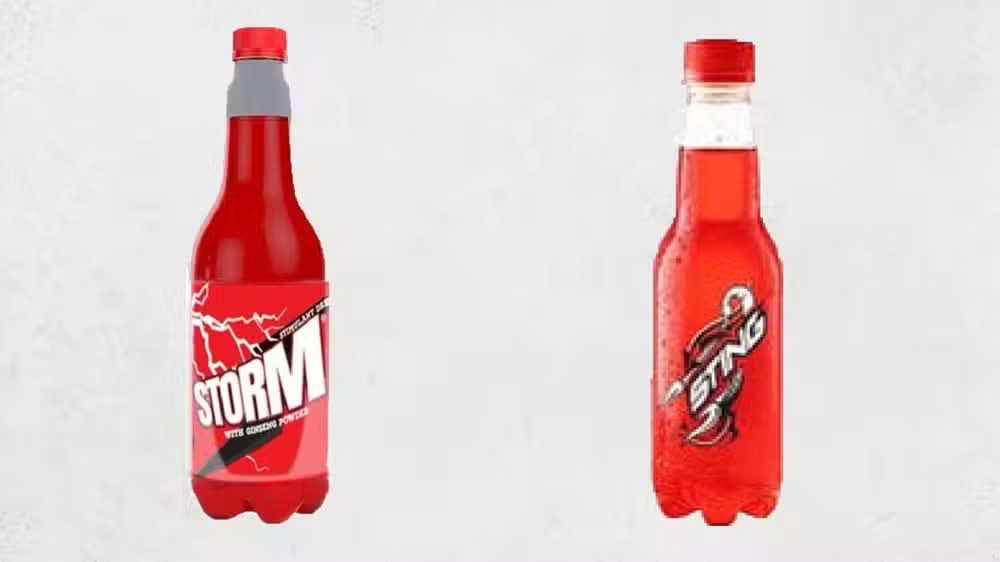


The Competition Commission of Pakistan (CCP) has issued a Rs. 150 million penalty against Mezan Beverages (Pvt) Ltd after concluding that the company engaged in deceptive marketing practices by closely imitating the packaging and trade dress of PepsiCo’s Sting energy drink for its own product, Storm.
Regulatory Findings and Violation
In its formal order, the CCP determined that Mezan’s Storm energy drink mimicked—in overall commercial impression the key visual and design elements of Sting, including:
- A red‑dominant colour scheme
- Bold, slanted white lettering with aggressive visual motifs
- A bottle shape and presentation resembling the Sting product
- Branding elements that could lead to consumer confusion at the point of sale
This conduct was classified as parasitic copying and a violation of Section 10 of the Competition Act, 2010, which prohibits deceptive marketing practices that mislead consumers or distort competition.
The CCP emphasized that legal trademark registration for Storm did not immunise the company from competition law where the overall impression of packaging misleads the average consumer.
Legal History and Procedural Delays
The dispute originated in 2018 when PepsiCo Inc. lodged a formal complaint alleging that Mezan designed Storm to benefit unfairly from the Sting brand’s market goodwill. Throughout the ensuing regulatory inquiry, Mezan repeatedly challenged the CCP’s jurisdiction in the Lahore High Court, securing stay orders in 2018 and 2021 that stalled the investigation for several years.
In June 2024, however, the Lahore High Court dismissed Mezan’s petitions, reaffirmed the CCP’s authority to proceed with the case, and clarified that competition proceedings under the Act are distinct from trademark litigation. The court also held that pre‑emptive legal challenges to CCP show‑cause notices were not maintainable.
Enforcement and Competitive Significance
By imposing the Rs. 150 million fine, the CCP signalled stringent enforcement against imitators in Pakistan’s fast‑moving consumer goods sector. The regulator stated that copycat branding and misleading packaging “will not be tolerated,” irrespective of a company’s market size or domestic status.
This ruling underscores an active application of competition law to defend consumer interests and brand integrity, and may influence how beverage and packaged goods companies structure product design and marketing to avoid legal risk going forward.
Deceptive marketing disputes in Pakistan typically involve protracted litigation and jurisdictional challenges, which have historically delayed enforcement outcomes. The CCP’s decision in this case reflects efforts to assert regulatory authority and deter practices that distort competitive dynamics or exploit established brand equities.