


With mobile-scams escalating globally, the efficacy of a smartphone’s built-in protections is under scrutiny. A new study (and accompanying reporting) suggests that devices running Android may offer stronger protection against scam texts and calls than those running iOS (iPhones). This write-up dissects the methodology, findings, implications, criticisms, and relevance for users (including in Pakistan) of this claim.
Study Overview & Methodology
- The report was published by Google LLC via its Security Blog (“How Android provides the most effective protection to keep you safe from mobile scams”).
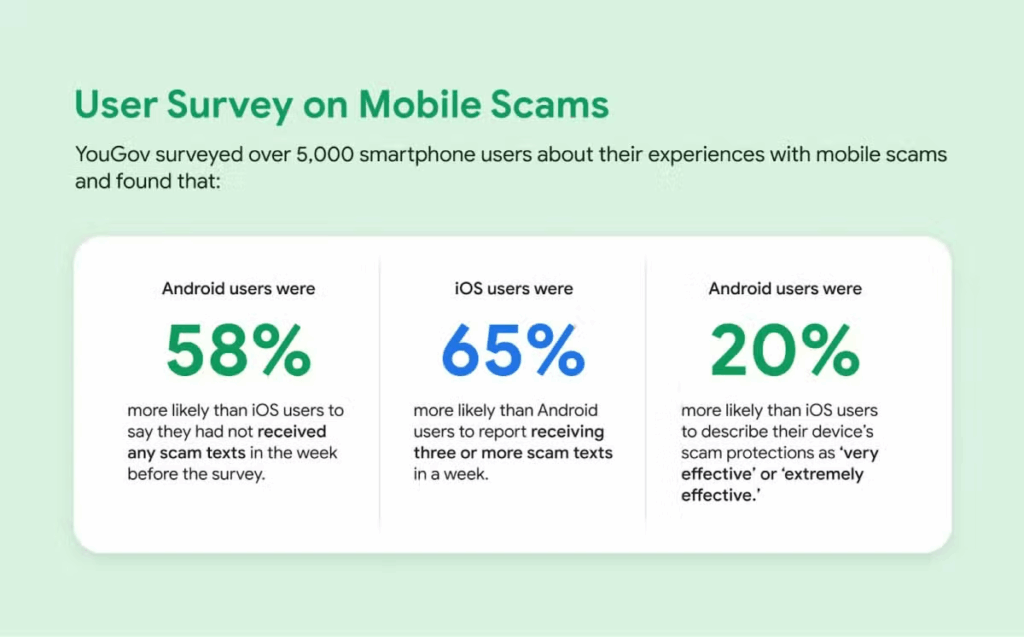
- Sample: A survey of about 5,000 smartphone users across three countries (United States, India, Brazil) in July-August 2025, conducted in partnership with YouGov.
- Additional independent evaluations:
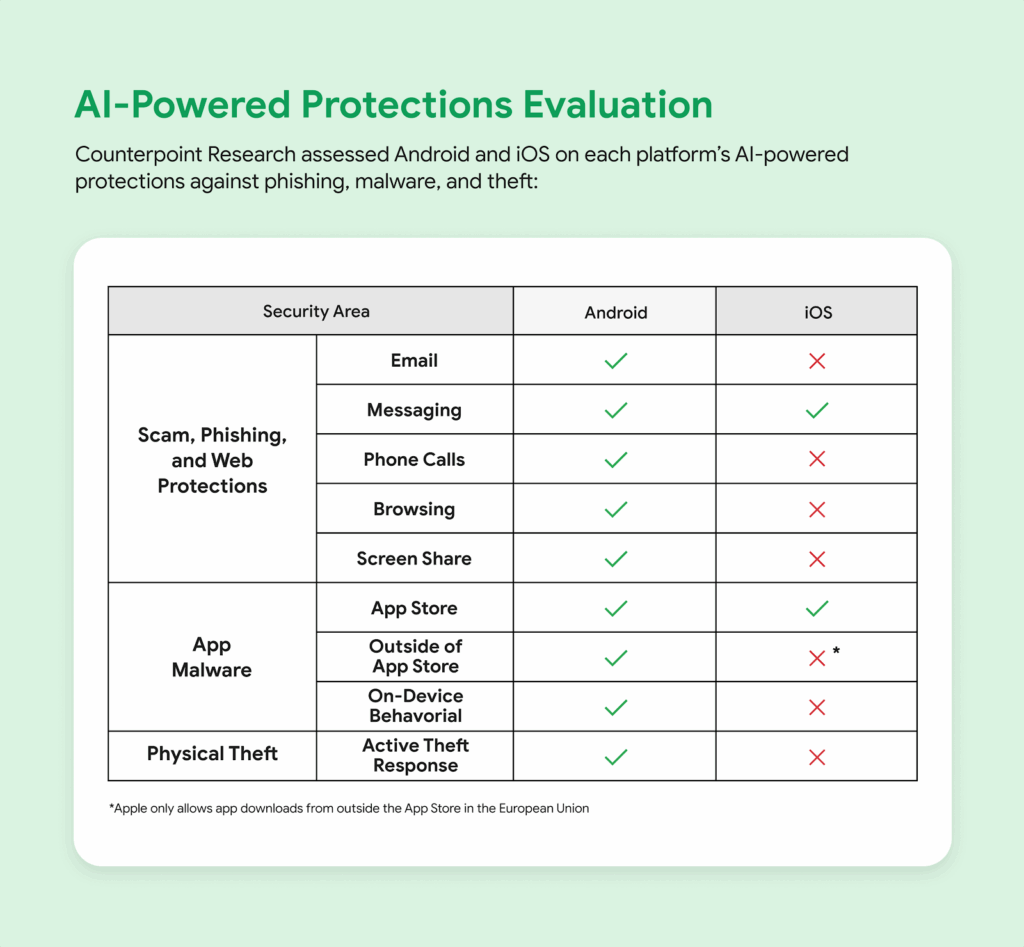
- Counterpoint Research compared AI-powered protections across Android & iOS.
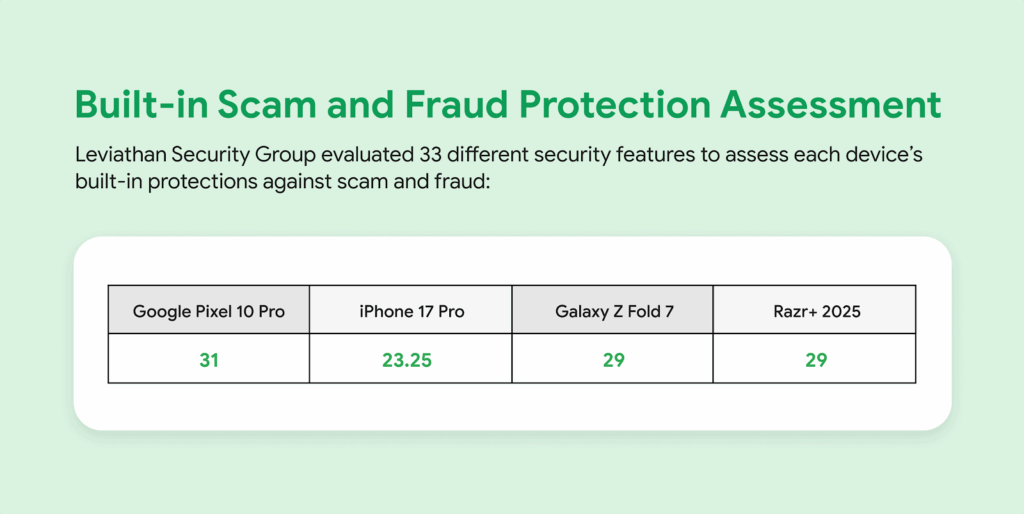
- Leviathan Security Group performed device-level benchmarking (e.g., comparing flagship Android devices vs iPhones) on scam/fraud-prevention features.
- Key definitions: “Scam texts” = unsolicited SMS/MMS messages that attempt fraud; “scam calls” = malicious/impersonation calls; protections include detection, blocking, real-time warning features.
Key Findings
- Lower incidence of scam-texts among Android users
- Android users were 58% more likely than iOS users to report receiving no scam texts in the preceding week.
- For flagship flagship Android (e.g., Google Pixel) vs iPhone: Pixel users were 96% more likely than iPhone users to report zero scam texts.
- Conversely, iPhone users were 65% more likely than Android users to report three or more scam texts in a week.
- User-confidence differences
- Android users were 20% more likely than iOS users to rate their device’s scam-protection as “very effective” or “extremely effective”.
- iPhone users were ~150% more likely than Pixel users to describe their device as not effective at all for stopping mobile fraud.
- Built-in protection features & layered approach
- Google reports Android intercepts over 10 billion suspected malicious calls/messages every month.
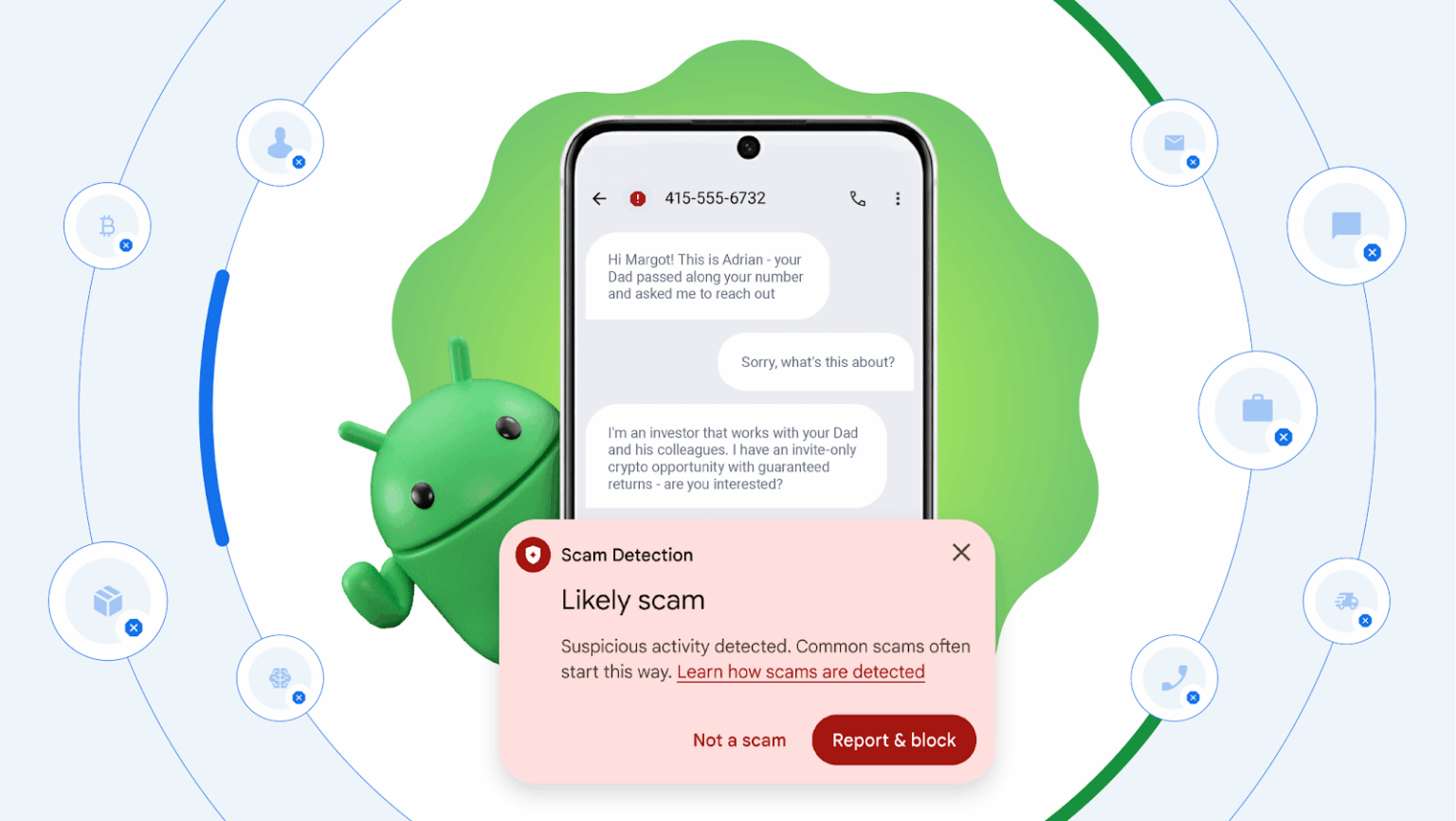
- Android’s protections span multiple channels: spam message filtering (via Google Messages), call screening/automated blocking (Phone by Google), on-device AI analyses of conversation patterns, link-blocking in messages.
- Independent study (Counterpoint) found Android devices had AI-powered protection across ~10 security categories (email, browsing, calling, app install risks), while iOS offered substantially fewer (≈2) in this assessment.
- Device-level performance
- Among devices benchmarked, the Pixel 10 Pro (Android) emerged ahead of the iPhone 17 Pro and others in default (i.e., out-of-the-box) scam/fraud defenses.
- Features that stood out: automatic call screening/answering to vet unknown callers, real-time warnings if screen-sharing or app install happens during call, blocking suspicious links in messages.
Why Android Seems to Lead (According to Study)
- Proactive detection & blocking: Rather than only reacting after user gets tricked, Android builds layered defences that stop threats before reaching user (e.g., filtering messages, blocking numbers).
- On-device AI: Many protections run on-device (rather than server-side), enhancing privacy and speed of detection. For example, during a call the phone may block a suspicious action.
- Broader surface coverage: The study argues Android’s protections span not just apps, but messages, calls, links, installations, behavioral signals — more holistic.
- Scale & telemetry: Google claims massive volume of intercepted threats (10 billion+ per month) giving large data to train detection systems.
- Continuous updates/improvements: Android (especially Google’s Pixel line) is presented as evolving rapidly in this domain.
Limitations & Considerations (Critical View)
- Sponsored/Company-reporting bias: The primary data comes from Google’s blog and related survey; as the platform provider, Google has a vested interest.
- Geographic sample: The survey covers US, India, Brazil — results may not generalize globally (Pakistan, Middle East etc) — local carriers/market conditions vary.
- Phone models matter: The especially strong results are for recent Android flagships (e.g., Pixel 10 Pro). Lower-end Android devices may not receive same protections.
- Definition of “scam text”: Self-reported surveys rely on user perception; what counts may differ across users.
- iOS protections unaccounted for in full: The study focuses on “scams” (texts/calls) not necessarily other threat types (malware, jailbreaks). iPhone may still have advantages elsewhere.
- Temporal snapshot: These are results at one timepoint; scam tactics evolve rapidly; protections may shift.
- Availability by region: Some features (call screening, RCS protections) may be variable by country or carrier, which may affect Pakistani users.
Implications for Pakistan & Local Users
- As a user in Pakistan, this study suggests that value is placed on built-in anti-scam protections, not only brand ecosystem.
- When selecting a smartphone, it may be worthwhile to check whether the device supports the latest protections (call screening, AI-based detection) in your region/carrier.
- Even if Android may “lead” in this specific dimension (scam calls/texts), users should still adopt best practices: block unknown numbers, keep OS up to date, enable built-in protections (e.g., message spam filters).
- For iPhone users in Pakistan: Though the study shows a relative gap, it doesn’t mean iPhones are unsafe — many protections still exist — but extra vigilance may be beneficial.
- For budget devices (often popular in Pakistani market): Verify whether features are included by manufacturer/carrier; flagship Android devices may get more advanced protections.
The study indicates that Android devices — particularly modern flagships — offer stronger protection against scam texts and calls compared to iPhones, according to self-reported user data and independent benchmarking. This marks a shift from the longstanding narrative that iPhones automatically offer the best security.
However, this conclusion has caveats: it is based on selected markets and devices, and focuses specifically on scam-messages/calls (not all security threats). For users in Pakistan and elsewhere, the takeaway is to pay attention to device-specific security features and carriers’ support, rather than relying solely on the platform divide.
Recommendations
- For users: Enable built-in protections on your phone (spam filter for messages, call screening, unknown-number blocking).
- For smartphone purchasers: Consider how well the manufacturer/carrier implements anti-scam protections, not just brand.
- For developers/industry watchers: The arms-race between scam-methods (often AI-driven) and defence systems means continual updates are required.
- For Pakistan market: Carriers could partner to optimize number-blocking/spam-reporting systems locally; users should report scam calls/texts to help refine detection.
Sources:
- Google Security Blog
- LiveMint
- AndroidCentral / AndroidAuthority / GadgetHacks coverage of study
- Deccan Herald